Neo Genesis was released in December 2000 as the first set of the "Neo" era, introducing the Generation 2 Pokémon from Gold and Silver (the Johto region). Its 111 cards also debuted the Darkness and Metal energy types and the Baby Pokémon mechanic, meaningfully expanding the game.
For collectors, Neo Genesis is anchored by the Lugia holo (9/111), one of the most iconic and valuable cards of the era. As a WotC-era set it exists in 1st Edition and Unlimited printings, and 1st Edition Lugia in high grade is a genuine chase piece.
This guide covers identification, the holo lineup, print variants, and how to value your Neo Genesis cards.
How to identify a Neo Genesis card
Neo Genesis introduced a refreshed card frame and features Johto Pokémon (Chikorita, Cyndaquil, Totodile lines and their evolutions). It uses the Neo-era set symbol and card numbers to /111.
- Look for Generation 2 (Johto) Pokémon and the Neo Genesis set symbol.
- Card numbers read "x/111".
- 1st Edition cards carry the black "Edition 1" stamp.
- Darkness and Metal type Pokémon first appear here.
Neo Genesis chase cards
Neo Genesis has 19 holographic rares (cards 1–19, including alternate-art holos of Feraligatr, Meganium and Typhlosion plus a holo Metal Energy). The Johto starters' final evolutions and Lugia are the primary chase cards, especially in 1st Edition and high grade.
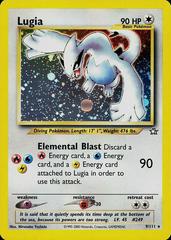
Lugia
9/111
The signature chase card of the entire Neo era.
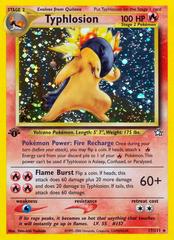
Typhlosion
17/111
Fire starter final evolution holo.
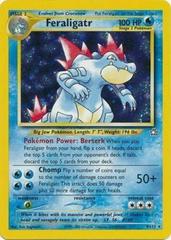
Feraligatr
4/111
Water starter final evolution holo.
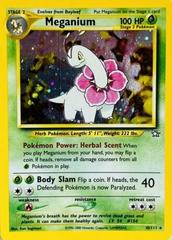
Meganium
10/111
Grass starter final evolution holo.
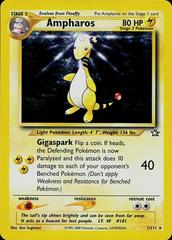
Ampharos
1/111
Opens the set; popular electric holo.
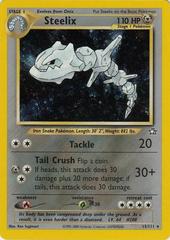
Steelix
15/111
One of the first Metal-type holos.
Card images are provided for identification via our pricing partner. Pokémon and card artwork are trademarks of their respective owners; Card Buyers is not affiliated with or endorsed by Nintendo, The Pokémon Company, or Wizards of the Coast.
Neo Genesis print variants
Neo Genesis uses the standard WotC 1st Edition / Unlimited split.
1st Edition
Black "Edition 1" stamp; scarcer and worth a premium, especially for Lugia.
Unlimited
No stamp — the standard, more common printing.
Errors & misprints
Neo Genesis has one famous censored illustration and a redesigned card frame collectors should recognize.
Moo-Moo Milk (101/111) censored art
The original Japanese illustration showed a Sentret suckling on a Miltank's udder. It was considered inappropriate for the English audience and redrawn to show several cans of Moomoo Milk in a barn with a Cleffa.
New Neo-era card frame
Neo Genesis changed the frame: the evolution box became circular, HP switched from red to black text, the evolution stage moved below the HP, and Weakness/Resistance gained a background graphic. This is a quick way to date a card to the Neo era.
Neo Genesis theme decks
Neo Genesis launched with two preconstructed theme decks. Sealed copies are collectible and help identify the release.
| Deck | Types | Focus |
|---|---|---|
| Hotfoot | Grass / Fire | Aggressive Fire and Grass attackers |
| Cold Fusion | Lightning / Water | Lightning and Water tempo |
What the Neo era changed
Neo Genesis was a turning point: it brought the Johto Pokédex into the TCG, introduced Darkness and Metal types (previously only Team Rocket's "Dark" cards existed), and added Baby Pokémon with their own evolution rules. It also introduced the Pokémon Tool subclass of Trainer card — items that stay attached to a Pokémon in play, echoing the held-item mechanic from Gold and Silver. Together these set the template for the three Neo sets that followed.
Because it kicked off a new generation, Neo Genesis holds strong nostalgic appeal for collectors who grew up with Gold and Silver.
The Lugia holo: the era's grail
Lugia (9/111) is the marquee card of the entire Neo era. As the box-art legendary of Pokémon Silver, printed in a notoriously condition-sensitive set, clean high-grade copies are genuinely scarce — and 1st Edition Lugia in PSA/BGS 9–10 is one of the most valuable non-Base-Set WotC cards.
Because the Neo foil scratches so easily and the dark border shows whitening, even small flaws sharply reduce a Lugia's grade and value. If you have one, handle it minimally and consider professional grading before selling.
Grading and condition notes for Neo Genesis
Neo-era holos use Cosmos foil on thinner stock than Base Set, and they are among the hardest vintage cards to find in gem condition. Edge whitening, holo scratches, and print lines are all common, so grade dramatically affects value.
Inspect corners and edges under angled light, scan the foil for hairlines, and check centering on both front and back. For Lugia and the starter holos, the gap between a raw near-mint copy and a graded gem is large.
Full Neo Genesis holo rare checklist
All 19 Neo Genesis holographic rares (cards 1–19/111). Note the alternate-art duplicate holos of Feraligatr, Meganium and Typhlosion, plus the holo Metal Energy at 19.
| # | Card | Type |
|---|---|---|
| 1/111 | Ampharos | Lightning |
| 2/111 | Azumarill | Water |
| 3/111 | Bellossom | Grass |
| 4/111 | Feraligatr | Water |
| 5/111 | Feraligatr (alt art) | Water |
| 6/111 | Heracross | Grass |
| 7/111 | Jumpluff | Grass |
| 8/111 | Kingdra | Water |
| 9/111 | Lugia | Colorless |
| 10/111 | Meganium | Grass |
| 11/111 | Meganium (alt art) | Grass |
| 12/111 | Pichu | Lightning |
| 13/111 | Skarmory | Metal |
| 14/111 | Slowking | Psychic |
| 15/111 | Steelix | Metal |
| 16/111 | Togetic | Colorless |
| 17/111 | Typhlosion | Fire |
| 18/111 | Typhlosion (alt art) | Fire |
| 19/111 | Metal Energy | Metal |
What is Neo Genesis worth?
Lugia is the value leader by a wide margin, with 1st Edition high-grade copies commanding strong prices. The Johto starter holos (Typhlosion, Feraligatr, Meganium) and Steelix hold solid collector demand. Commons and non-holos are modest individually.
Note that Neo-era holos are notoriously condition-sensitive — the foil and borders show wear easily — so grade has an outsized effect on value. A complete Neo Genesis set, especially 1st Edition, is best appraised as a whole.
Search any Neo Genesis card for an instant offer, or send the set in for a free appraisal.
Related set guides
2001
Neo Discovery Set Guide
Neo Discovery, the second Neo set, is best known for introducing the beloved Espeon and Umbreon holos. Here is how to identify, collect, and value Neo Discovery cards.
2001
Neo Revelation Set Guide
Neo Revelation, the third Neo set, introduced the coveted "Shining" Pokémon — Shining Gyarados and Shining Magikarp — a brand-new ultra-rare category. Here is how to identify and value the set.
2000
Gym Challenge Set Guide
Gym Challenge closed out the Gym era and is best known for Blaine's Charizard — one of the most desirable non-Base Charizards in vintage Pokémon. Here is how to identify and value Gym Challenge cards.
Frequently asked questions
What is the most valuable Neo Genesis card?
The Lugia holo (9/111) is by far the most valuable and iconic card in the set, particularly in 1st Edition and high grade.
How many cards are in Neo Genesis?
Neo Genesis has 111 cards, including 19 holographic rares (cards 1–19), which include alternate-art holos of Feraligatr, Meganium and Typhlosion and a holo Metal Energy. It was printed in both 1st Edition and Unlimited runs.
What did Neo Genesis introduce to the Pokémon TCG?
Neo Genesis introduced Generation 2 (Johto) Pokémon, the Darkness and Metal energy types, Baby Pokémon, and the Pokémon Tool Trainer subclass. It was the first set of the Neo era and used a redesigned card frame.
Why are Neo Genesis holos so condition-sensitive?
The Neo-era foil and card stock scratch and show edge wear easily, so surface and edge condition strongly affect grade. This makes high-grade Neo Genesis holos — especially Lugia — disproportionately valuable.
What is the censored card in Neo Genesis?
Moo-Moo Milk (101/111). The original Japanese art showed a Sentret suckling on a Miltank's udder, and it was redrawn for the English release to show cans of Moomoo Milk in a barn with a Cleffa.
Which theme decks came with Neo Genesis?
Neo Genesis shipped with two theme decks: Hotfoot (Grass/Fire) and Cold Fusion (Lightning/Water).